 Knowledge Library
Decision in brief
Use a cost per accepted change to compare two workflows that meet the same quality and access requirements. A seat can work well for steady interactive use if normal and peak workloads fit the allowance. Metered use is easier to attribute by project if you can reconcile the billed usage and set an effective stop limit.
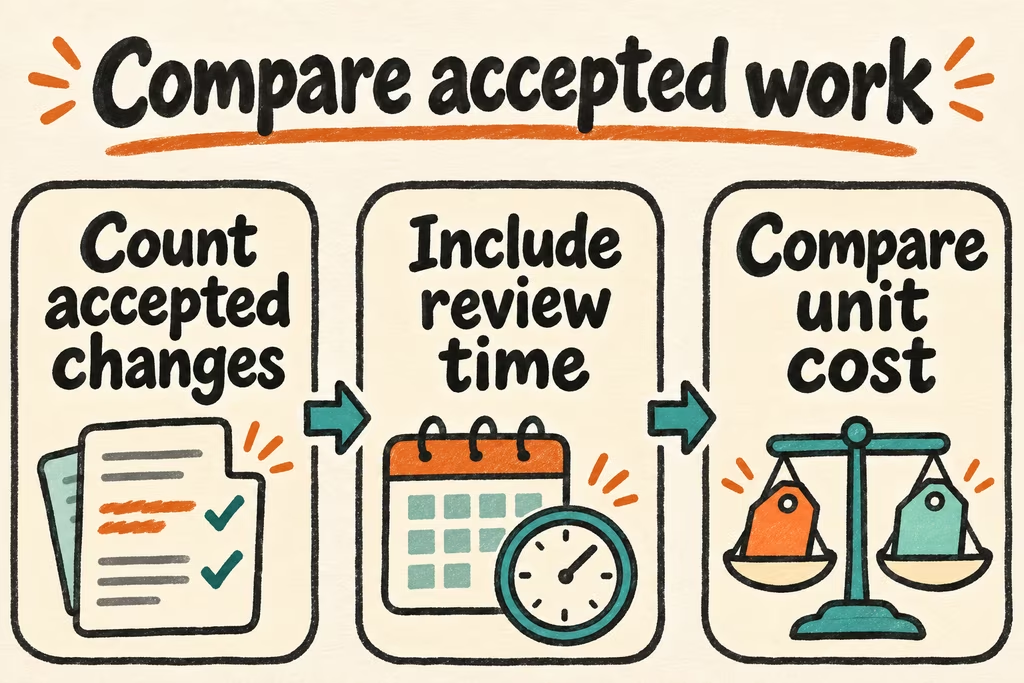
Capture spend and delivered work in the same window
Add allocated seat costs, metered charges, attributable infrastructure, and human testing, review, and rework at your internal hourly rate. Divide by the number of task outcomes accepted against criteria fixed before the trial. Keep rejected attempts and retries in the numerator. If nothing passes, record zero accepted changes and the full spend.
Build a separate ledger for each route the work actually uses. An included allowance can be shared across multiple features or measured over a reset window. API rates can distinguish input, output and cache traffic. Read the current plan documentation and verify the billing account and allowance shown in the product before forecasting a busy week.
| Cost pattern | Budget decision | Evidence to collect |
|---|---|---|
| Steady interactive use | Compare eligible seats using the live allowance and reset window | Usage during an ordinary week and a busy week, including other features sharing the allowance. |
| Batch jobs or variable projects | Compare API or credits on the authorized billing route | Reconciled usage by task, retries, idle setup, and a verified spending stop. |
| Private inference on equipment you operate | Include GPU, hosting, power, and operator time | Throughput and uptime under sustained load, plus the cost of idle capacity. |
| High volume of difficult-to-review patches | Budget reviewer and rework time explicitly | Minutes to acceptance, important defects missed, and cost of repeated attempts. |
What two HN discussions show about incomplete bills
GordonS reported receiving notice about a shared ChatGPT and Codex allowance. The budgeting question is what happens when coding and other chargeable features draw from the same account window. Test the mix your team expects and use current official terms to verify eligibility and timing.
In a discussion about a reported reduction in Claude Code tokens, jnwatson pointed out that some work had moved to a different service and token budget. Include every provider used for retrieval, planning, editing, and validation before claiming a lower bill.
Pilot a budget with a stop limit
- Choose five comparable tasks and a normal and peak workload window. Before starting, define acceptance checks, a maximum total spend, and a delay your team can absorb at the limit.
- Record each task's plan or billing project, provider, model, retries, reviewer minutes, and final acceptance. Allocate shared seat or hardware cost once across the work it actually supports.
- Reconcile the trial with the account dashboard or invoice. Calculate dollars per accepted task and retest a representative busy period. Include the cost of any fallback and time lost while waiting for capacity.
- Proceed only when expected and peak spending meet their limits and acceptance stays at the agreed level. Stop when you cannot attribute material charges, enforce a budget, or sustain work after the allowance is exhausted.