 Knowledge Library
Decision in brief
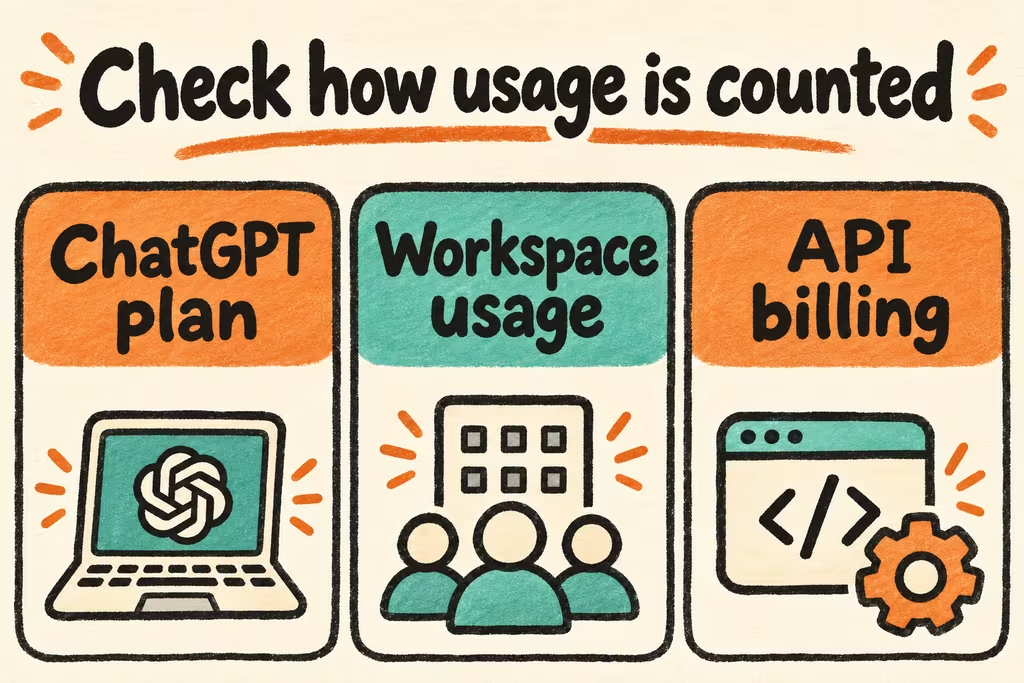
OpenAI lists Codex access across ChatGPT plans, including Free and Go, with limits and surfaces varying by account. As checked on November 16, 2026, the US monthly plan prices are $0 for Free, $8 for Go, $20 for Plus, and $100, $200, or $500 for Pro. Workspace billing and API-key billing have their own meters.
OpenAI Codex pricing by ChatGPT plan
OpenAI lists Codex on eligible Free and Go accounts with a limited rollout. For Codex Cloud, check eligibility on Plus, Pro, Business, Enterprise, Healthcare, or Education and confirm your workspace permits it. OpenAI’s Pro help page says Pro 200 is open to new subscriptions again. Read the current plan table and check the offer in your account before upgrading.
| Plan | Listed US monthly price | What to verify for your work |
|---|---|---|
| Free / Go | $0 / $8 | Lightweight use, model and client availability, rollout eligibility. |
| Plus | $20 | Included usage, reset windows, cloud eligibility, and whether credits are offered. |
| Pro 100 / Pro 200 / Pro 500 | $100 / $200 / $500 | Higher included usage by tier. Pro 500 is the Pro tier with Ultrafast. |
| Business / Enterprise | Workspace terms | Which billing model applies, member controls, enabled features, and overage approvals. |
Codex usage limits and reset windows
OpenAI lists estimates for local messages per five-hour period on Plus and Standard Business. For GPT-6.1 Sol, its published estimate is 15–160 local messages in the window. The same page says Pro currently has no five-hour limit and weekly limits may apply. Limits depend on task, model, context, reasoning, tools, and execution mode. A cloud job can draw more than a local message.
Check Settings > Usage, the account usage dashboard, or /status in an active CLI session. On allowance-based plans, verify which meter is exhausted and when it resets. Some eligible users can purchase additional credits. If your organization uses enterprise token-based billing, ask an admin whether a user limit or workspace budget applies.
Subscription and API-key billing
ChatGPT sign-in uses the account or workspace’s included usage and billing policy. An API key instead charges your API account for eligible model and tool usage. Some subscriptions or offers include API credits with separate terms. Check your API balance, rate card, and project budget directly if you are running automation.
As a standard direct API calculation, GPT-6.1 Sol lists $2 per million uncached input tokens and $10 per million output tokens. A hypothetical workload totaling 200,000 uncached input tokens and 20,000 output tokens costs $0.60 before cache charges, tools, taxes, or other applicable rates. This example uses standard rates and assumes each request is below the threshold for long-context pricing.
HN cases on usage, pricing, and choosing a plan
HN user jillesvangurp described using Codex for old technical debt, new applications, and infrastructure migration. Their experience suggests testing several representative tasks before extrapolating from a single chat.
HN discussions about a change to token-based pricing and a change to short-window limits document how the billing questions evolved during the corpus window. Treat them as dated discussion records. Use the current official tables and your account dashboard for eligibility and rates.
Budget for Codex with your actual task mix
- Track one week of usage in the account’s meter. Record the model, execution mode, task class, and observed usage for each completed patch or review.
- Record how long quota blocks work. Start with the lowest eligible plan that supports the surface you need and remains within your acceptable interruption threshold.
- For API-based scripts, set a project budget and benchmark the cost of successful runs, including retries, cache behavior, and any separate tool charges.
- Recheck current price and allowance before upgrading. Compare the total subscription and extra usage spend per accepted task rather than counting prompts.