 Knowledge Library
Decision in brief
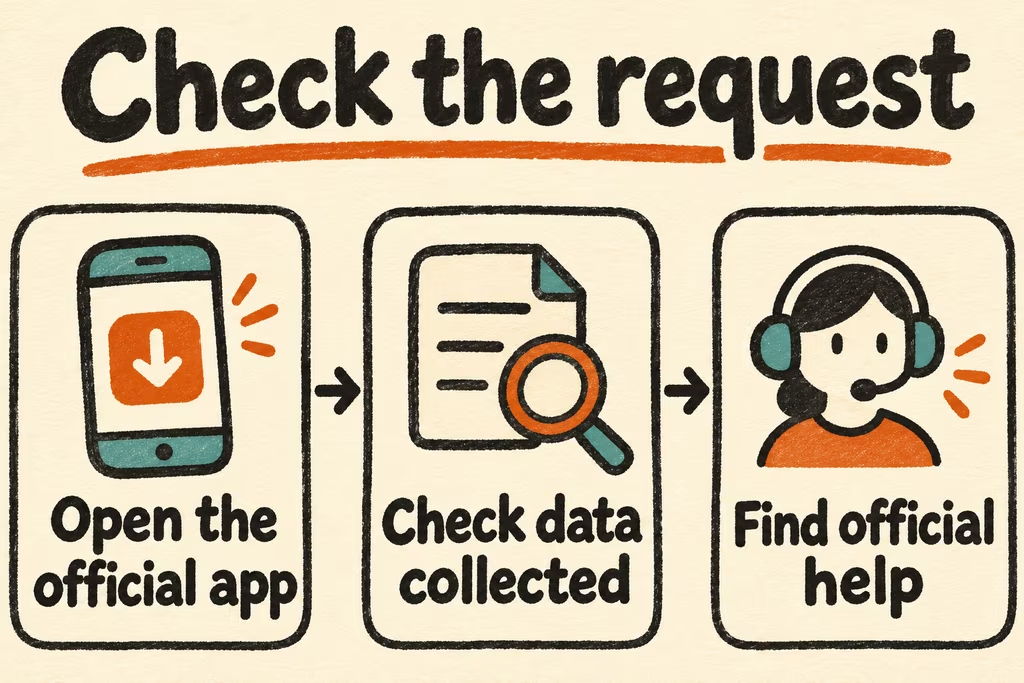
Identify who is asking you to prove what, for which account, and under which rule. Read the platform's notice from the official app or site, compare the approved options, and check what each one collects and retains. If the outcome is wrong or a request looks unrelated, use the official support or appeal path.
How does age verification work across methods and jurisdictions?
Age assurance is the umbrella term used by regulators for approaches that determine or estimate whether someone meets an age threshold. A declaration uses a person's own statement. Estimation predicts an age or age band from signals. Verification relies on evidence such as a document or a credential issued by another service. Which method is permitted or sufficient depends on the rule and the service.
In Australia, eSafety says that from December 10, 2025, covered platforms must take reasonable steps to prevent people in Australia under 16 from creating or keeping accounts. The regulator says government-issued ID or Australian government-accredited Digital ID cannot be the only option. In the UK, Ofcom's Online Safety Act guidance defines highly effective age assurance for specified services and duties. It assesses methods against accuracy, robustness, reliability, and fairness. Check the regulator's scope and the platform's notice together.
| Path presented | What it may process | What to check first |
|---|---|---|
| Age declaration | Stated birthday or threshold response | Whether this step qualifies for the service and the rule |
| Age estimate | An image or other signals used to determine an age range | Processor, retention, accessibility, and how an inaccurate estimate can be reviewed |
| Age verification | A document or a credential that can establish a threshold | Which details are sent to the platform, who keeps the evidence, and for how long |
| Official review or appeal | The outcome and evidence required to correct it | Official channel, decision timescale, and privacy policy for submitted records |
What two HN discussions clarify
In the opening discussion of Australia's rules, paxys noted that the threshold described was under 16 even though the headline used a broad term for teenagers. Use the actual age threshold and account scope when deciding whether a rule applies.
In another thread, giancarlostoro raised concern about erroneous age reports and the sensitivity of evidence submitted during account recovery. Use that concern to check who sees an appeal submission, how long it is retained, and whether an approved alternative is available. Individual HN accounts provide scenarios to check.
Review an age check before submitting information
- Open the service's official support page independently of the message that prompted the check. Record which account feature, age threshold, and jurisdiction the notice covers.
- List the approved methods shown for your account. Compare which data goes to the service or a third party, available retention information, accessibility, and any approved lower-disclosure option.
- Find the official appeal or support route before submitting anything. Prepare a brief record of the event or error without saving sensitive documents in a shared note. When helping a child, review the regulator's family guidance.
- Continue only if the request is real, its purpose is understood, and the chosen approved path fits your privacy needs. Stop if a message asks for identity records outside the official flow or if you cannot establish who receives them. Ask official support about a disputed result.