 Knowledge Library
Decision in brief
Track a merger timeline using both parties' exact names and the legal event confirmed by each source. A signed agreement, an expected close date, and a recorded completion answer different questions. Update your dependency plan only after you locate the terms, release, or effective date that affects your use of the acquired platform.
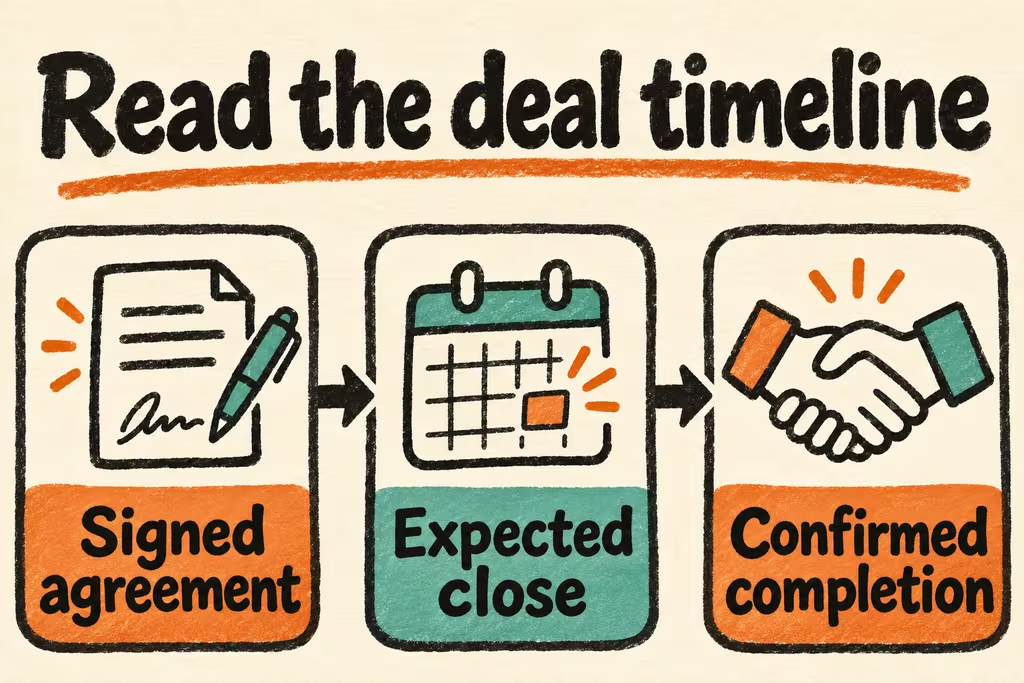
Follow the merger process from announcement to outcome
In December 2025, Netflix announced a definitive agreement for a Warner Bros. transaction after a planned separation of Discovery Global. On February 26, 2026, Netflix announced that it would decline to match Paramount Skydance's proposal. The October 6, 2026 closing filing states that Skydance completed the later Warner Bros. Discovery acquisition under its February 27 merger agreement. Track the Netflix and Skydance transactions as separate records, because the parties and agreement scope changed.
For the software case, Bun's December 2025 announcement said it was joining Anthropic and described plans to remain open source and MIT licensed. Use this as a dated statement of intent and check the current license or contract governing the exact release you rely on before making a portability decision.
| Milestone | Source to look for | Record or action |
|---|---|---|
| Announced or signed | Company announcement and filed agreement when public | Parties, covered assets, agreement date, and conditions |
| Regulatory or shareholder step | Regulator decision, proxy materials, or voting results as appropriate | Which condition changed, in which jurisdiction, and what remains |
| Agreement ends or a different bidder emerges | Termination notice, filing, or direct party statement | Preserve the original deal record and create a separate entry for replacement terms |
| Completed and integrating | Closing release or filing, then published service or license terms | Effective date, owner, and evidence of any change to a dependency |
What HN reactions suggest monitoring
In the original Netflix announcement discussion, embedding-shape questioned how the proposed combination would affect consumer choice. The useful monitoring question is which concrete plan, title, or distribution term changes and when the change takes effect.
In the Bun discussion, afavour focused on whether the existing MIT license and open-source practices would continue. Turn that concern into two checkpoints: the license associated with the version you ship and the terms or release process the project publishes later.
Build a deal tracker that another person can check
- Document one proposed or completed public deal. Use the exact legal entities, affected assets, and announcement date in separate columns.
- Record the source and date for signing, required approvals, termination or revised terms, and closing. Mark milestones unknown whenever your sources are incomplete.
- List one dependency that matters to you, such as continuity of an API, a release license, or access to a service. Identify an owner, what evidence would change the plan, and a fallback to test in a sandbox.
- Use a current-status label only when the latest relevant primary record supports it. Stop or narrow the claim when a bid is confused with a close, a different acquirer is mixed into the record, or a proposed service change has no effective terms.