 Knowledge Library
Decision in brief
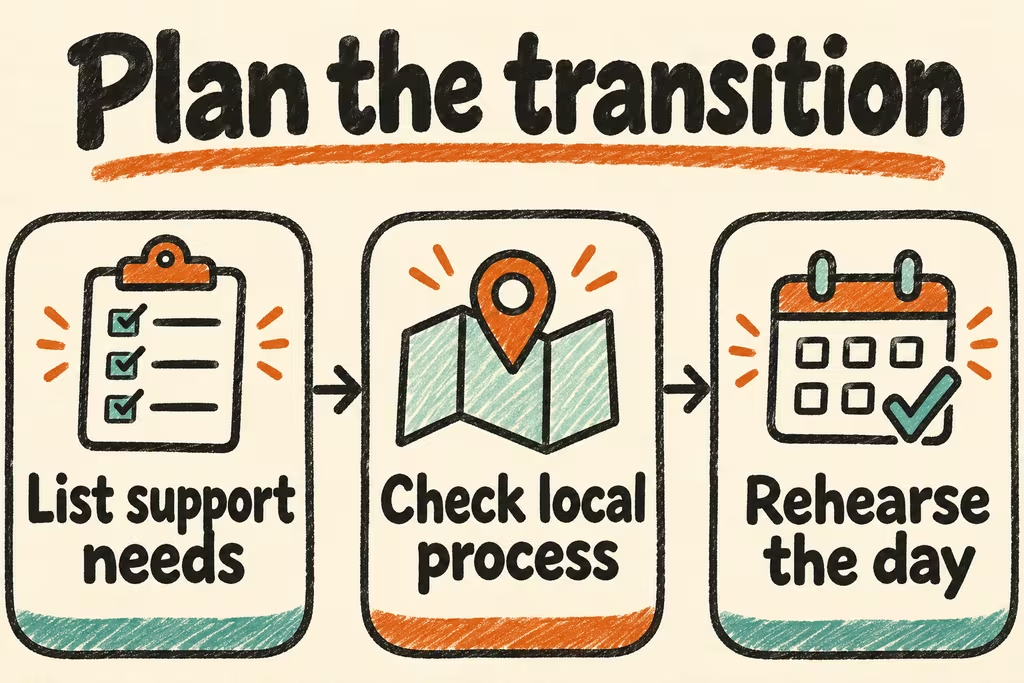
Start by writing down what the current school arrangement cannot provide and which supports it does provide. Check your state and district or local authority for the appropriate enrollment and reporting path. Rehearse the proposed routine around the existing school schedule before changing enrollment. Proceed when the relevant office has confirmed the process and you can cover instruction, peer activities, and the services your child needs.
Choose a path before shopping for a curriculum
The U.S. Department of Education directs families to state and local authorities for home education rules. California’s education department describes several routes, including enrolling in a school that offers independent study and operating a home-based private school. Under the latter route, the department describes an annual Private School Affidavit. It treats that document as registration. New York City’s home-schooling office lists a letter of intent, an Individualized Home Instruction Plan, quarterly reports, and an annual assessment. Check your own official guidance for the current deadlines, exceptions, and re-entry procedure.
Separate the learning plan from the administrative calendar. List which adult will teach and who can help during illness or work conflicts. Write down how you will preserve access to accommodations, therapies, extracurriculars, and a peer group, and confirm access directly with each provider. Ask your child which parts of the arrangement would help and which they would miss.
| Constraint | Option to investigate | Confirm before changing enrollment |
|---|---|---|
| Uncertain whether home instruction fits | Keep current enrollment and rehearse after-school or weekend blocks | Measure adult preparation time, engagement, and the effect on rest |
| Need school administration or staff support | Ask about local public or private independent study | Who sets curriculum, keeps records, and provides the specific supports you need |
| Need a flexible, parent-directed schedule | Check the state's recognized parent-directed path | Applicable notices, required records, assessments, and responsible office |
| Need a support or transition plan | Meet the school and relevant local providers first | Written contacts, service availability, accepted records, and a re-entry route |
What two HN accounts add to the preparation checklist
tobinfekkes described a childhood routine with a defined morning block, curriculum adapted to the child, and school electives and sports. Ask whether those activities admit your child under your local arrangement and where they sit in a real week.
jcpst reported trying homeschooling and ultimately finding their local public school better suited to their family, including its social opportunities. Keep a fallback and decide what would trigger it before committing.
Run a preparation checklist before starting homeschooling
- Make one page of goals and constraints with your child. Record current supports, expected weekly adult hours, a monthly spending limit, and a point of contact for enrollment.
- Match each required action to your official local guidance. Confirm the responsible office, applicable forms, timing, reporting, and return procedure. Keep a dated record of the answers.
- Rehearse several learning blocks and one peer activity around the existing school schedule. Record preparation time, whether planned work happened, the child's feedback, and any provider commitments.
- Proceed only if the official process is confirmed, a realistic weekly plan fits the family's limits, and essential supports have named providers. Pause if an enrollment obligation or required service is unresolved, or if the rehearsal repeatedly crowds out rest or work.