 Knowledge Library
Decision in brief
Pick one book you want to return to and give it ten minutes after something you already do most days. Observe your current routine for a week, then test one change for a week. Keep the change if you start reading more often without crowding out other commitments. If you rarely get started, change the cue or access to the book. If you start and repeatedly want to put it down, try another book.
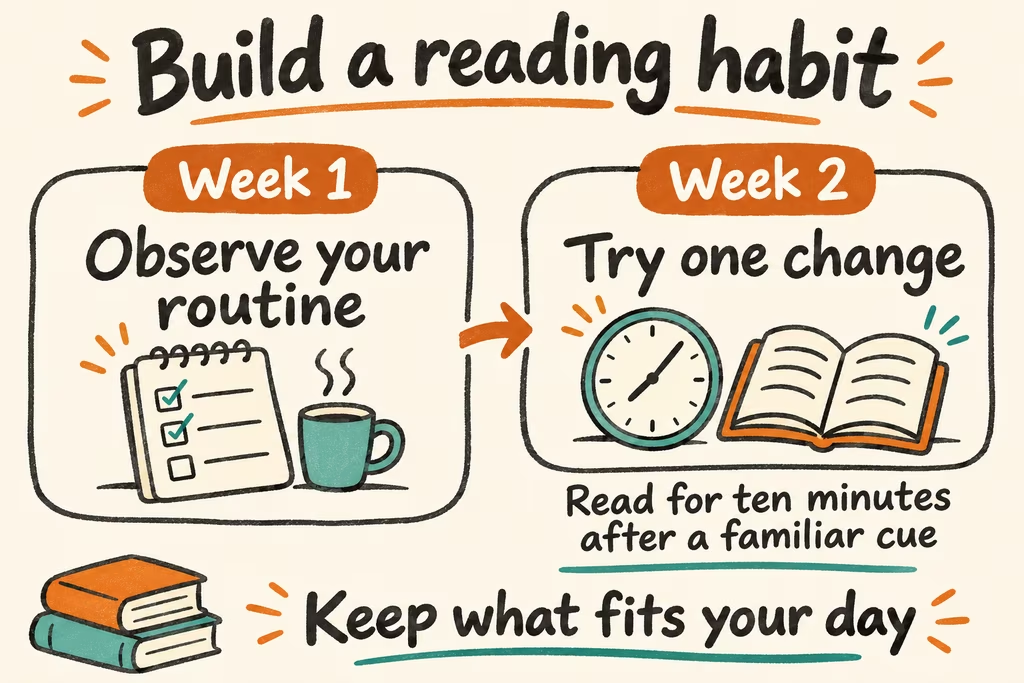
How to build a reading habit around the obstacle you actually have
A stable cue might be clearing the dinner table or sitting down on a regular train ride. Decide the next action in advance, such as opening the bookmarked page. Use a library book, ebook, or audiobook you already have available. Keep listening minutes in a separate column if you want to distinguish them from time reading text.
In a study of daily eating, drinking, and activity routines, Lally and colleagues observed wide variation in how long behaviors took to become more automatic. The design here borrows the repeated cue as a trial condition. Two weeks gives you a practical window to compare routines. A separate qualitative study of reading for pleasure describes people rediscovering reading through shorter books and using audio for access, which offers alternatives to try if your current format makes starting difficult.
| What happens now | Change one thing | Record |
|---|---|---|
| You forget to start | Leave the book at an existing cue, such as by your usual chair. | Sessions started after that cue. |
| You switch to another app | Put that app outside the first ten minutes for the test week. | What filled the time instead, including if you switched to a different screen activity. |
| You have time but stop after a few pages | Switch to a shorter or more appealing book and keep the same cue. | Minutes read and willingness to return tomorrow. |
| Reading the current format is awkward | Use a format that fits the activity and setting, such as larger text or audio during a walk. | Reading or listening minutes by format, and whether it fits the routine. |
What Hacker News readers changed
In a discussion about quitting social media, tanepiper reported going from almost no books to about one a month after reducing their use of major platforms. In the same discussion, patates said YouTube filled the time they had freed. If you are testing a change to a scrolling habit, record the replacement activity before deciding whether it helped.
In a separate Ask HN discussion, _dcez described reading print for leisure after shutting down the computer, while still preferring digital books for technical material that required typing code. Choose your cue and format for the kind of reading you want to do. These accounts suggest trial options for an individual reader.
Run the trial for fourteen days
- For days one through seven, keep your usual routine. Each day record whether you started reading, total reading minutes, and what you did in the time you might have used. Note travel, late work, or other unusual days.
- Before day eight, pick a feasible ten-minute slot and one change from the table. State the cue and prepare the book or device in advance. Choose a success threshold such as two additional starts and twenty additional reading minutes during the second week.
- For days eight through fourteen, use the cue and record the same measures. Resume at the next normal cue after a missed day. If you have to change the book, note the date so you can interpret the two changes separately.
- Keep the change if you meet your threshold and it fits your routine. Stop or choose a shorter slot if it repeatedly displaces sleep, work, or family time. If the weeks were unusually different, repeat the experiment under comparable conditions before drawing a conclusion.